

IoT improves OEE in manufacturing plants by providing real-time visibility into machine performance, downtime, and product quality. In today’s competitive environment, manufacturers must reduce losses and maximize productivity, and IoT-enabled automation makes this possible through data-driven decision-making. OEE measures how efficiently machines operate by evaluating availability, performance, and quality. However, many plants struggle to identify where losses are actually happening.
This is where the Internet of Things (IoT) makes a real difference. By continuously collecting and analyzing machine data, IoT enables manufacturers to move from guesswork to data-driven decisions. As a result, plants gain better control, higher productivity, and improved operational efficiency.
At Devanta Tech, we help industries implement practical IoT-enabled solutions through Industrial Hardware, OT Software, and complete Turnkey Automation services.
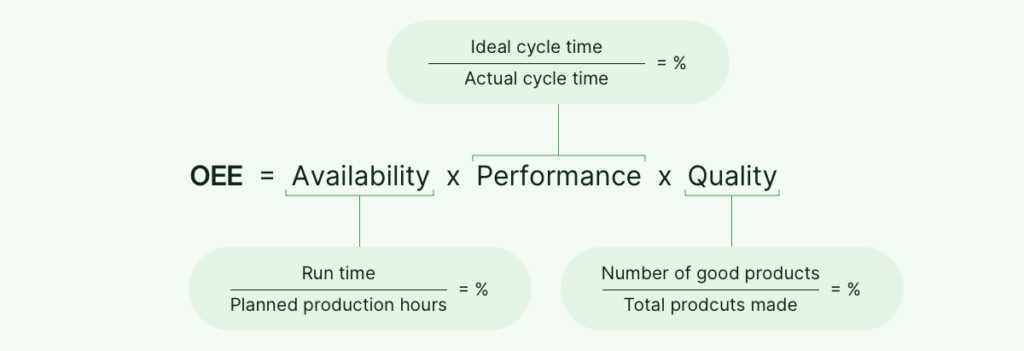
Understanding OEE in a Practical Way
Before improving OEE, it is important to understand its three core components:
- Availability – Whether machines are running during planned production time
- Performance – Whether they are operating at optimal speed
- Quality – Whether the output meets required standards
If even one factor drops, overall efficiency decreases. Consequently, small inefficiencies often lead to significant production losses over time.
How IoT Improves OEE in Manufacturing Plants in Real Time
1. First, How IoT Improves OEE in Manufacturing Plants by Reducing Downtime
For example, consider a packaging company facing repeated motor failures. Previously, maintenance teams responded only after breakdowns occurred. As a result, production stopped unexpectedly, leading to delays and higher repair costs.
However, after installing IoT sensors, the company began monitoring vibration, temperature, and load in real time. Whenever abnormal patterns appeared, alerts were generated instantly. Consequently, maintenance teams could fix issues before major failures occurred.
This proactive approach not only reduced downtime but also increased machine lifespan and improved availability.
Devanta Tech provides Industrial Hardware and OT Software solutions specifically designed to enable predictive maintenance across industries.
2. Next, How IoT Improves Performance in Manufacturing Plants
Similarly, imagine an automotive components manufacturer where machines are running, yet production targets are not being met. Although the equipment appears operational, hidden speed losses and micro-stoppages reduce performance.
With IoT-enabled dashboards, supervisors can track cycle time, idle time, and production output in real time. Therefore, they can quickly identify bottlenecks and take corrective action.
As a result, performance improves steadily instead of declining unnoticed.
Devanta Tech supports Automotive & Auto Components, Machinery & Equipment Manufacturing, and Manufacturing & Discrete industries with real-time production monitoring solutions.
3. Finally, How IoT Improves Quality and OEE in Manufacturing Plants
In industries such as Process & Chemicals or Electrical & Electronics, even minor parameter variations can cause product defects. Traditionally, quality checks happen after production. Consequently, large batches may need rework or rejection.
With IoT integration, critical process parameters like temperature and pressure are continuously monitored. If values exceed acceptable limits, alerts are triggered immediately. Therefore, issues are corrected before defects multiply.
Through Engineering Consulting and Turnkey Automation, Devanta Tech ensures quality management becomes preventive rather than reactive.
A Real-Time Example: Turning Data into Results
For instance, a mid-sized machinery manufacturer approached Devanta Tech with low visibility and frequent breakdowns. Initially, their OEE was around 60%. Moreover, production data was recorded manually, which delayed decision-making.
After implementing IoT-based monitoring:
- Downtime reduced significantly
- Maintenance became predictive
- Real-time dashboards improved shift-level control
- Quality defects decreased
Within 6–8 months, OEE improved to nearly 85%. Importantly, the machines were not replaced. Instead, intelligence was added through connected systems.
Why Choose Devanta Tech?
Above all, Devanta Tech focuses on practical and scalable implementation. We combine:
- Robust Industrial Hardware
- Advanced OT Software
- End-to-end Turnkey Automation
- Strategic Engineering Consulting
Furthermore, we serve industries including the Packaging Industry, Electrical & Electronics, and Machinery Manufacturing. Therefore, our solutions are designed to deliver measurable ROI, not just technology upgrades.
Ready to Improve Your Plant’s OEE?
If your plant is facing downtime, performance gaps, or quality challenges, now is the right time to adopt IoT-driven automation.
Contact Devanta Tech today to discuss how we can help you build a smarter, more efficient manufacturing operation.
Frequently asked questions (FAQs)
1. How quickly can IoT impact OEE performance?
Typically, measurable improvements are visible within 3–6 months, especially when downtime and performance losses are clearly identified.
2. Do we need to replace existing machines to implement IoT?
No. In most cases, IoT sensors can be integrated with current equipment, making your existing machines smarter.
3. What makes IoT a strategic investment rather than just a technology upgrade?
Because IoT directly improves availability, performance, and quality, it increases productivity and profitability simultaneously.
