

Shop floor automation KPIs play a critical role in understanding whether automation investments are actually delivering results. Many manufacturers invest in shop floor automation to improve productivity, reduce manual dependency, and gain better control over operations. However, once automation is implemented, measuring performance becomes just as important as deploying technology.
The answer lies in tracking the right KPIs. With the rise of shop floor digitization, factories now generate real-time data from machines, operators, and production lines. But without a structured approach and a reliable shop floor management system, this data remains underutilized. Monitoring the right KPIs helps manufacturers turn automation into measurable performance improvement.
Learn how Devanta Tech’s Turnkey Automation & IIoT Solutions enable complete shop floor automation with real-time KPI visibility.
Why Shop Floor Automation KPIs Matter
After shop floor automation, traditional manual reporting becomes slow and inaccurate. Production teams need real-time insights to respond quickly to downtime, quality issues, or efficiency losses. Shop floor digitization makes this possible by capturing accurate data directly from machines and processes.
A well-designed shop floor management system converts this data into meaningful KPIs that teams can act upon daily. At Devanta Tech, the focus is on practical KPIs that help supervisors, maintenance teams, and management make faster and better decisions on the shop floor.
Key Shop Floor Automation KPIs to Track
1. OEE – A Core Shop Floor Automation KPI
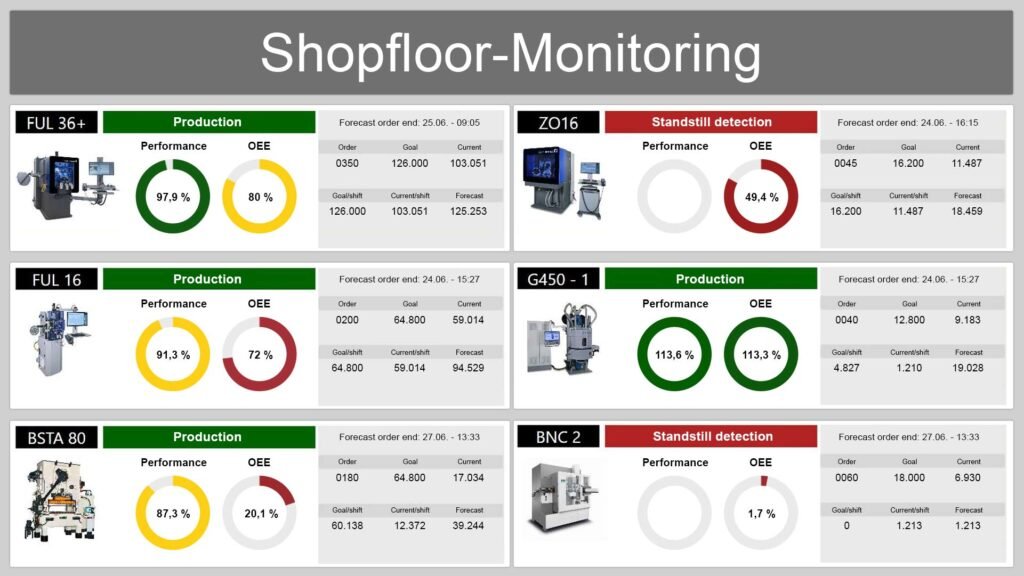
OEE is one of the most important KPIs after shop floor automation. It measures how effectively equipment is utilized by combining availability, performance, and quality. OEE helps identify hidden losses, such as frequent stoppages or reduced speeds.
With shop floor digitization, OEE can be calculated automatically without manual intervention.
Discover how OT Software Implementation & Data Historian solutions help capture and analyse OEE data accurately in real time.
2. Machine Downtime & Failure Trends
Unplanned downtime directly impacts production targets and costs. Tracking downtime duration, frequency, and root causes helps maintenance teams improve equipment reliability.
Through shop floor digitization, machine signals and alarms are captured continuously. Reliable data collection starts with proper connectivity.
Explore Devanta Tech’s industrial hardware sales and installation services for robust machine connectivity and accurate data acquisition.
3. Production Output & Cycle Time
One of the main objectives of shop floor automation is to increase throughput while maintaining stable cycle times. These KPIs indicate whether automation is enhancing production flow or introducing new bottlenecks.
Using real-time data from shop floor digitization, Devanta Tech configures dashboards within the shop floor management system that allow supervisors to monitor output trends and optimise line performance instantly.
4. Quality Rate & Rejections
Automation improves consistency, but quality KPIs ensure that defects are identified early. Tracking rejection rates and first-pass yield helps reduce rework, scrap, and customer complaints.
By integrating quality data with production data through shop floor digitization, the shop floor management system provides a complete view of process performance, enabling faster corrective actions.
5. Energy & Resource Utilisation
Energy consumption is often overlooked after shop floor automation. Monitoring energy usage per unit produced helps control operational costs and supports sustainability initiatives.
As part of its Turnkey Automation & IIoT Solutions, Devanta Tech integrates energy meters and utilities data into the shop floor management system, delivering actionable insights for better resource management.
How Devanta Tech Helps You Track the Right KPIs
Devanta Tech provides end-to-end solutions to ensure KPI-driven success after automation:
- Industrial Hardware Sales & Installation for machine and sensor connectivity
- OT Software Implementation & Data Historian for secure, structured data storage
- Turnkey Automation & IIoT Solutions for complete shop floor digitization
- Engineering, Consulting & Training to help teams understand and use KPIs effectively
See how Devanta Tech’s Engineering, Consulting & Training services support long-term KPI adoption and continuous improvement.
We work with manufacturers across Automotive & Auto Components, Manufacturing & Discrete, Electrical & Electronics, Machinery & Equipment Manufacturing, Packaging Industry, and Process & Chemicals, delivering KPI-driven automation solutions tailored to industry needs.
Frequently asked questions (FAQs)
1. When should KPI tracking start after shop floor automation?
KPI tracking should begin immediately after commissioning to establish a baseline and measure improvements over time.
2. How does shop floor digitization improve KPI accuracy?
It eliminates manual data entry by capturing real-time data directly from machines and processes.
3. Can a shop floor management system scale with business growth?
Yes. Devanta Tech designs scalable systems that support additional lines, plants, and future expansion.
