

Introduction: Why IIoT Implementation in Factories Determines Operational Success
IIoT implementation in factories is transforming how manufacturing plants improve efficiency, reduce downtime, and strengthen decision-making. However, not every implementation delivers measurable results. Some plants see real improvements in downtime, quality, and cost control, while others struggle with limited impact.
So, what makes the difference?
Successful IIoT implementation in factories begins with solving real operational problems instead of chasing technology trends. They align IIoT with business goals. The following real-world-inspired scenarios highlight what actually works.
Lesson 1: Solve a Critical Downtime Problem First
A manufacturing plant producing precision components faced repeated machine breakdowns. Production targets were achievable, yet unexpected stoppages disrupted schedules. Maintenance teams worked efficiently; however, they lacked visibility into early warning signs. Therefore, leadership decided to monitor only the most failure-prone machines rather than digitize the entire facility.
The team installed sensors through structured Industrial Hardware Sales & Installation and connected the machines to a centralized OT Software Implementation & Data Historian system.
Soon, supervisors identified a clear pattern. Vibration levels gradually increased before breakdowns occurred. As a result, maintenance shifted from reactive repairs to planned interventions.
Downtime reduced. Spare part usage dropped. Production stability improved.
If your plant struggles with recurring equipment failures, explore our Turnkey Automation & IIoT Solutions to implement predictive monitoring effectively.
Lesson 2: Use Data to Control Operational Costs
Another factory noticed rising electricity expenses despite steady production output. Management initially assumed external factors were responsible. However, detailed machine-level monitoring told a different story. By implementing IIoT-based energy tracking, the plant gained real-time visibility into power consumption. The dashboards revealed excessive energy use during idle periods between shifts.
Consequently, the operations team adjusted scheduling and shutdown procedures. Within months, energy efficiency improved significantly. Instead of guessing the problem, leadership relied on real-time insights.
Our Engineering, Consulting & Training Services help industries convert operational data into measurable cost savings.
Lesson 3: Improve Quality Through Real-Time Visibility
In a process-oriented facility, operators recorded temperature and pressure readings manually. Although data existed, it lacked immediate accessibility. Because of delayed reporting, deviations often surfaced during final inspections.
After implementing centralized dashboards, operators gained instant visibility into live process parameters. Whenever values crossed defined limits, alerts prompted immediate corrective action.
Moreover, historical trend analysis enabled supervisors to identify recurring variations. Quality consistency improved. Scrap rates declined. Decision-making became faster and more confident.
For enhanced production monitoring, consider our OT Software Implementation & Data Historian Solutions designed for real-time industrial environments.
Common Patterns Among Successful Implementations
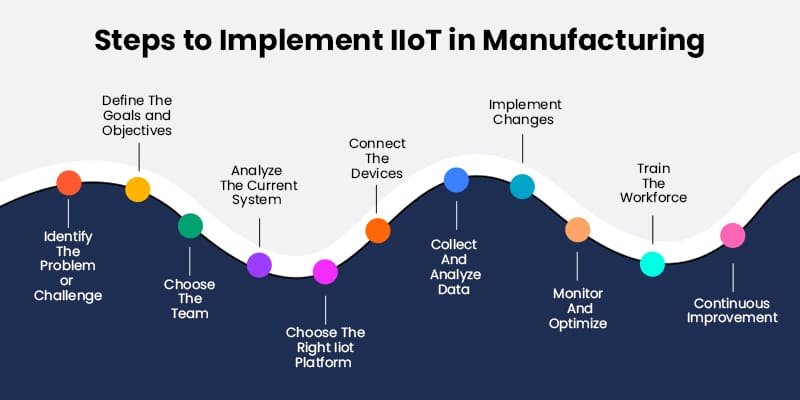
Factories that achieved measurable IIoT success shared several practical approaches:
Clear Objectives
They defined specific targets such as reducing downtime or optimizing energy usage.
Phased Execution
They avoided large-scale disruptions and expanded gradually.
Operator Engagement
They trained shop-floor teams early, which ensured smooth adoption.
Strong Integration Strategy
They integrated hardware, software, and management systems effectively.
At Devanta Tech, we guide industries through each of these stages. Our team designs structured digital architectures that align technology with operational performance.
Why Execution Matters More Than Technology
Effective IIoT implementation in factories requires more than technology; it demands strategic execution and operator involvement. Instead, strategic implementation drives measurable improvement.
Factories that succeeded with IIoT treated it as a performance improvement initiative rather than a technology upgrade. They focused on ROI, scalability, and system integration.
Devanta Tech delivers:
- Turnkey Automation & IIoT Solutions
- Industrial Hardware Sales & Installation
- OT Software & Data Historian Implementation
- Engineering, Consulting & Training
We ensure seamless connectivity between machines, operators, and management systems so that your plant operates as one intelligent ecosystem.
Conclusion: Turning Lessons Into Action
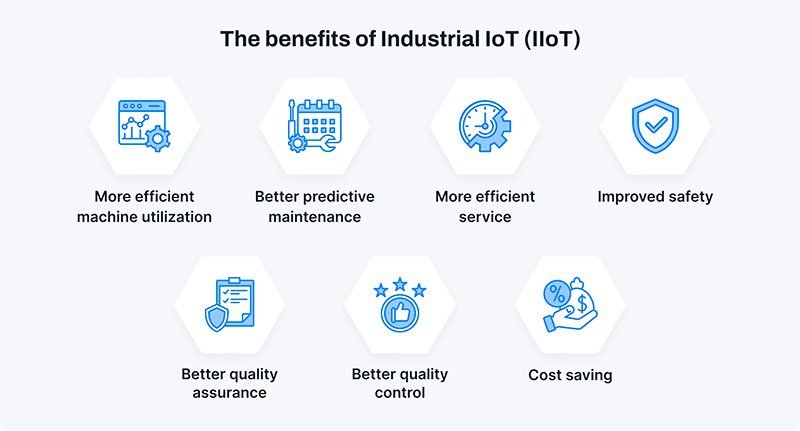
Factories across India prove that IIoT delivers real value when implemented strategically. They reduced downtime, controlled energy costs, and strengthened quality management by using structured data visibility.
If your organization aims to move from reactive operations to predictive performance, the time to act is now.
Connect with Devanta Tech today to discuss how our Industrial Digitalization and IIoT Solutions can help you build a smarter, more efficient, and future-ready manufacturing operation.
Frequently asked questions (FAQs)
1. Can IIoT improve ROI quickly?
Yes. Focused implementations targeting critical issues often show measurable improvements within months.
2. Is phased IIoT deployment effective?
Absolutely. Phased execution reduces risk and ensures scalability.
3. What is the key to successful IIoT implementation?
Clear objectives, operator involvement, and strong system integration ensure long-term success.
